Gray, faded fence? A good stain brings the color back and protects the wood from the Texas sun. Call, text, or send a few details, and get a price on staining your fence.
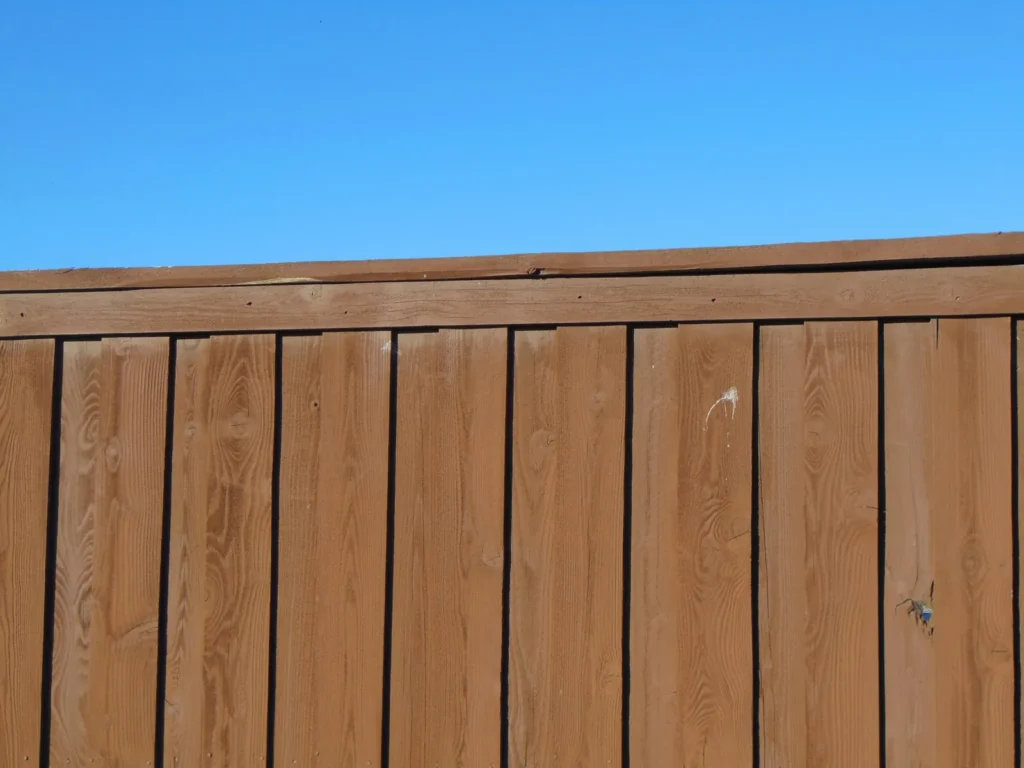
Why stain a cedar fence
Bare cedar weathers to silver-gray, and the surface wears faster without protection. A penetrating stain slows that down, helps the wood shed water, and keeps the fence looking new. It’s also the easiest way to blend in new pickets after a repair.
When it’s time
On a new fence, most stain makers want the wood to dry out first, so check the label or ask whoever is doing the work. On an older fence, sprinkle some water on it. If it soaks right in instead of beading up, or the color has faded, it’s time. Staining needs dry weather, so it doesn’t happen right before a rain.
Picking a stain
Oil-based penetrating stains are a long-time favorite for cedar. Water-based stains clean up easier and some hold up well. The more pigment, the more sun protection and the less wood grain shows; semi-transparent is the popular middle ground.
What a good staining job includes
Cleaning the fence first, done carefully so pressure washing doesn’t chew up the wood. Time to dry. Covering plants and concrete. Spraying, then brushing or back-rolling it in. And a straight answer on whether both sides are included; staining your neighbor’s side needs their OK.
A short fence is a fine weekend project. For a long or tall fence, or if you want it to look even, it’s worth having it done.
We cover all of North Tarrant County, including Keller, Southlake, Colleyville, North Richland Hills, and Roanoke.
Ready to bring your fence back? Call, text, or send us the details.